

• Rapid climate change is upending established plant diversity and growth patterns in the Arctic, with species blooming in some areas and declining in others, research suggests.
• The decades-long study of more than 2,000 plant communities across 45 areas in the Arctic tundra found that many locations saw vegetation change in type, abundance and growth, between 1981 and 2022.
• Some changes include large increases in shrubs and grasses across the Arctic and declines in flowering plants – which struggle to grow under the shade created by taller plants.
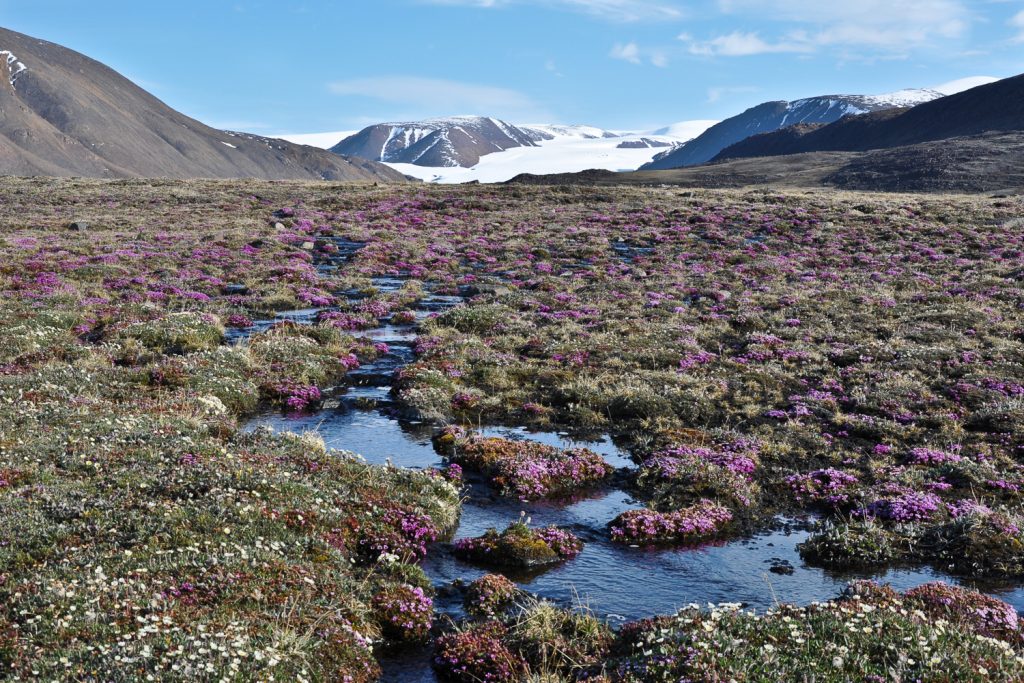
The study sheds light on how climate change is reshaping one of the world’s most fragile ecosystems – which is warming four times faster than the global average, previous research has shown. The results show how vegetation changes are an early warning signal that whole ecosystems might be about to change, with knock-on effects for animals, humans and the planet’s natural carbon storage systems, experts say.
Published in Nature, the research was funded by the European Union and the Natural Environment Research Council, among others.
A team of 54 researchers analysed more than 42,000 field records from 2,174 plots to compile a database of plant diversity – which will be essential to understanding future change in the coldest extremes of the planet.
Scientists studied samples from the low-lying tundra of the Canadian High Arctic and Svalbard to the shrublands above the treeline in Alaska, Canada and Fennoscandia.
The study, led by the University of Edinburgh in collaboration with the University of British Columbia with 49 partner institutions, concludes that the main drivers of these changes in plant diversity are warming temperatures and increased competition between plants.
In this regard, researcher Ramón y Cajal from the IBB, Pep Serra, said that this work «breaks with some simplified predictions of the effects of climate change on ecosystems», since «we often tend to think that the increase in temperature leads to a mere transposition of warmer ecosystems from lower latitudes. In this case, there was no such borealization of the Arctic, but rather a reorganization of biodiversity from already existing species».
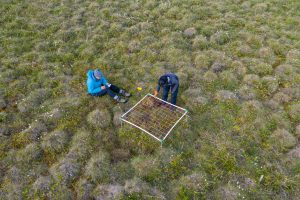
Lead author Dr Mariana García Criado, postdoctoral researcher, University of Edinburgh, said: «When thinking about the Arctic, we often imagine a barren wasteland, but the Arctic is surprisingly diverse. Tundra ecosystems can pack tens of plant species into a metre squared plot».
«And warmer temperatures are bringing in more species, but not everywhere. Shrubs are reshaping Arctic ecosystems by often leading to declines in biodiversity, but not always. It was surprising to find how the composition of plant communities changed in many different ways».
Professor Isla Myers-Smith, of the Universities of Edinburgh and British Columbia, said: «Often when we think about climate change impacts on the planet we think about biodiversity loss, but in the temperature-limited tundra, climate change is multi-faceted».
«At some of the sites in our study, biodiversity increased with warming. But where shrubs started to dominate, biodiversity declined. Taken together, our study indicates that biodiversity can follow diverging trajectories in the rapidly warming Arctic».
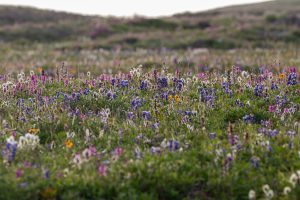
«Professor Emeritus Greg Henry, Department of Geography, University of British Columbia, Canada, said: “We need to do long-term research to understand the Arctic, as ecosystem change starts with plants. When they change, everything follows – including Arctic animals, local and Indigenous communities, and the global carbon cycle».
Reference article:
Mariana García Criado, Isla H. Myers-Smith, Greg Henry, Pep Serra, et al. Plant diversity dynamics over space and time in a warming Arctic. Nature. DOI: doi.org/10.1038/s41586-025-08946-8