
The Botanical Institute of Barcelona (IBB) has actively joined the FLORAPYR 3D, project, an international initiative aimed at enhancing the understanding and conservation of Pyrenean flora. This project continues the work started in the FLORAPYR AVANCE project, which was developed between 2020 and 2022, in which IBB researchers also participated. Now, with FLORAPYR 3D, the goal is to deepen the study and management of Pyrenean flora in the context of global change.
Objectives
The main objective of FLORAPYR 3D is to improve the knowledge of Pyrenean flora and habitats through the development of monitoring systems and support for conservation and management actions. Additionally, it seeks to raise public awareness and provide valuable data for public authorities and managers.
The new project, which will run until 2026, builds on the results obtained from previous programs but introduces new dimensions, such as phylogenomic studies and the expansion of seed banks, to advance in monitoring and conserving Pyrenean flora.
The participants are researchers from centers and botanical conservatories located near the Pyrenean mountain range. The IBB team, including researchers Jordi López (responsible for the IBB-CSIC partner), Neus Nualart (responsible for the Museum of Natural Sciences of Barcelona – MCNB partner), Oriane Hidalgo, Sonia Garcia, and Jaume Pellicer, is involved in various key scientific activities within the framework of FLORAPYR 3D project actions.
Actions
The project is organized into three main technical actions, each divided into several activities that the IBB team either participates in or leads. Through these actions, the project aims to enhance knowledge of Pyrenean flora and encourage public awareness and citizen involvement in their protection.
Enhancing and Disseminating Knowledge of Pyrenean Flora
IBB is involved in the PHYLOPYR initiative, which aims to develop a phylogeny of flowering plants in the Pyrenees using phylogenomic tools. IBB contributes samples for sequencing and provides reference sheets to be stored in five herbaria, including its own herbarium (BC), as well as technical support in its laboratories.
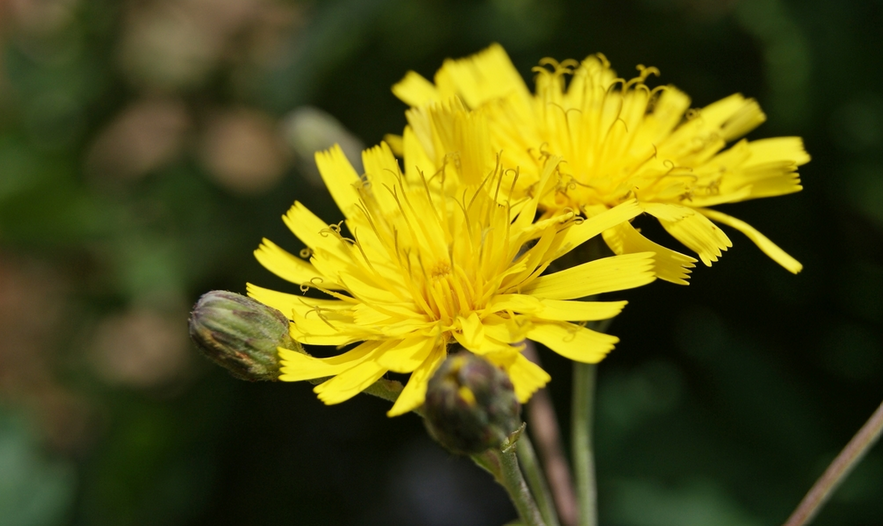
As part of this activity, IBB also contributes to a morphological, cytogenetic, and phylogenomic study of Pyrenean species of the genus Hieracium, which show a high degree of endemism, with the goal of clarifying species boundaries and better understanding the role of hybridization and apomixis in the radiation experienced by this genus in the Pyrenees.
The FLORAPYR 3D project also aims to expand data on vascular flora in the online Atlas of Pyrenean Flora and incorporate new data on bryophytes, a task in which IBB is collaborating through the importation of data from herbarium BC. Finally, as part of this activity, the project’s collaborating entities, including IBB, are designing an innovative outreach exhibition to bring Pyrenean flora closer to the general public.
Developing a Monitoring and Surveillance Network for Flora and Its Habitats
For this action, IBB is collaborating in the development of a web tool useful for researchers and managers to facilitate the monitoring of plant species in the Catalan Pyrenees. Additionally, it leads the promotion of citizen participation through the iNaturalist platform, which helps raise public awareness while increasing data collection. These data can later be used in multiple studies related to the management and conservation of Pyrenean flora as well as enriching the online Atlas. However, to ensure these data are of high quality and can be incorporated into the Atlas, a validation system for observations is being implemented.
Development of the Cross-Border Seed Bank Network and Conservation of Sensitive Species
Finally, IBB contributes data and photographs of plant species from other projects to the seed bank network, a fundamental tool for the long-term preservation of sensitive species in the Pyrenees.
Partners and Funding
The FLORAPYR 3D project is a collaboration between multiple research centers and botanical conservatories in the Pyrenean region, both Spanish and French.
The project is led by the Conservatoire Botanique National des Pyrénées et Midi-Pyrénées (CBNPMP) and is co-financed at 65% by the European Regional Development Fund (ERDF) through the Interreg V-A Spain-France-Andorra Program (POCTEFA 2014-2020).